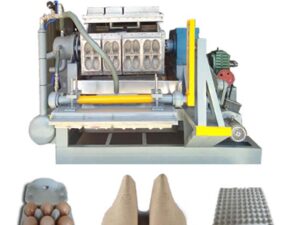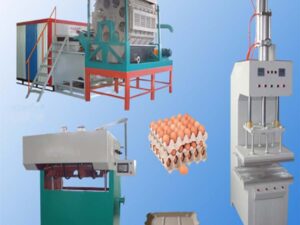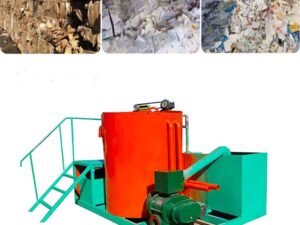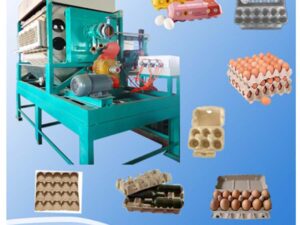
Are you planning to start an egg tray manufacturing business or expand your existing packaging production? An egg tray manufacturing plant converts waste paper into molded pulp products through a series of processes, including pulping, forming, drying, and packaging.
Recycling Equipment Inc. provides egg tray production equipment for businesses with different production requirements. Whether you need a small production line or a large-scale manufacturing plant, we can help you select a suitable configuration based on your target capacity, factory space, raw materials, and budget.
1. What Is an Egg Tray Manufacturing Plant?
An egg tray manufacturing plant is a complete production system used to turn recycled paper into egg trays and other molded pulp packaging products.
Unlike a single egg tray making machine, a complete plant includes several pieces of equipment that work together. These systems handle raw material preparation, pulp processing, tray forming, drying, and finished-product handling.
A typical egg tray manufacturing plant includes:
- Pulping system: Breaks waste paper into pulp.
- Pulp preparation system: Screens and adjusts pulp consistency.
- Egg tray forming machine: Shapes pulp into wet egg trays.
- Drying system: Removes moisture from the formed trays.
- Finishing and packaging equipment: Helps stack, count, and pack finished products.
The equipment configuration depends on the required output, product type, and available production space.
2. Raw Materials for Egg Tray Manufacturing
Waste paper is the primary raw material used in egg tray production. Common choices include:
- Waste newspapers
- Old corrugated cartons
- Office paper
- Mixed recycled paper
These materials are mixed with water in a pulping system to produce paper pulp. The pulp is then processed and transferred to the forming machine.
Using recycled paper provides a practical way to produce molded pulp packaging while making use of locally available waste materials. Before selecting a production line, it is important to consider the type, quality, and supply of waste paper available in your area.
3. Egg Tray Manufacturing Process
The egg tray manufacturing process mainly consists of four stages.
Step 1: Waste Paper Pulping
Waste paper is fed into a hydrapulper and mixed with water. Mechanical agitation separates the paper fibers and produces a pulp mixture.
Step 2: Pulp Screening and Preparation
The pulp passes through screening equipment to remove unwanted impurities. It is then transferred to mixing tanks, where its consistency is adjusted for the forming process.
Proper pulp preparation helps maintain stable production and consistent product quality.
Step 3: Egg Tray Forming
The prepared pulp is pumped into the egg tray forming machine. Molds shape the pulp into the required product, while a vacuum system removes excess water.
The wet trays are then transferred to the drying section. Different molds can be used to manufacture different sizes and designs of molded pulp products.
Step 4: Drying and Packaging
Freshly formed egg trays contain considerable moisture and must be dried before packaging. Depending on the project, customers can choose natural sun drying, brick-kiln drying, or a metal drying line.
After drying, the trays can be stacked, counted, and packed for storage or transportation.
4. Main Equipment in an Egg Tray Manufacturing Plant
Each piece of equipment plays an important role in the production process.
| Vifaa | Huvudfunktion |
|---|---|
| Hydrapulper | Converts waste paper into pulp |
| Screening equipment | Removes impurities from pulp |
| Mixing tank | Stores and adjusts pulp consistency |
| Pulp pump | Transfers pulp between systems |
| Egg tray forming machine | Forms wet trays using molds and vacuum suction |
| Drying system | Removes moisture from wet products |
| Packaging equipment | Helps stack and pack finished trays |
The forming machine is one of the most important parts of the plant because its configuration directly affects production capacity. The drying system is also important, as its capacity needs to match the output of the forming section.
For this reason, it is better to plan the entire production line rather than select individual machines without considering how they work together.
5. Egg Tray Manufacturing Plant Capacity and Models
Different businesses have different production targets. A small factory may only need around 1,000 pcs/h, while an established manufacturer may require a production line with a capacity of several thousand pieces per hour.
Recycling Equipment Inc. offers several forming machine configurations to meet different production needs.
| Mfano | Capacity (pcs/h) | Nguvu (kW) | Paper Consumption (kg/h) | Water Consumption (kg/h) |
|---|---|---|---|---|
| SL-1000-3×1 | 1,000 | 38 | 80 | 160 |
| SL-1500-4×1 | 1,500 | 38 | 120 | 240 |
| SL-2500-3×4 | 2,000–2,500 | 55 | 200 | 400 |
| SL-3000-4×4 | 2,500–3,000 | 60 | 240 | 480 |
| SL-4000-4×8 | 4,000–5,000 | 95 | 320 | 640 |
| SL-5000-5×8 | 5,000–6,000 | 95 | 400 | 800 |
| SL-7000-6×8 | 7,000 | 120 | 480 | 960 |
The figures above are reference specifications. Actual production output and consumption may vary depending on raw material quality, product design, operating conditions, and the final equipment configuration. Please confirm the specifications of your selected line before ordering.
When choosing a model, do not consider production capacity alone. You should also evaluate raw material consumption, power requirements, drying capacity, labor needs, and the expected demand for your products.
6. What Products Can an Egg Tray Manufacturing Plant Make?
An egg tray manufacturing plant can produce different molded pulp products by changing the forming molds.
Common product options include:
- Egg trays: Used to hold and protect eggs during storage and transportation.
- Egg cartons: Designed for retail packaging and individual egg protection.
- Quail egg trays: Smaller trays suitable for quail eggs.
- Fruit trays: Used to separate and protect fruit during handling.
- Seedling trays: Used in agricultural planting and nursery applications.
- Industrial molded pulp trays: Used for protective packaging of selected products.
If you plan to manufacture more than one product, discuss the required mold designs with your equipment supplier before purchasing the production line.
7. How Much Does an Egg Tray Manufacturing Plant Cost?
The cost of an egg tray manufacturing plant varies according to its capacity and configuration. There is no single price that applies to every project.
The main factors affecting the investment include:
Production capacity: Higher-capacity plants generally require larger or more advanced equipment configurations.
Drying method: Natural drying, brick-kiln drying, and metal drying systems have different equipment and installation requirements.
Mold requirements: Different product types and designs may require additional molds.
Automation level: The degree of automation affects equipment selection, labor requirements, and investment.
Installation and transportation: Shipping, installation conditions, and the factory location also influence the total project cost.
To receive a suitable quotation, prepare your target production capacity, product requirements, raw material information, and installation location. This allows the supplier to recommend a configuration that matches your project instead of offering an unsuitable standard package.
8. How to Choose the Right Egg Tray Manufacturing Plant Supplier
Selecting reliable equipment is important, but choosing the right supplier is equally important. Before making a purchase, consider the following points:
- Production experience: Check whether the supplier understands the complete pulp molding process.
- Equipment configuration: Confirm which machines are included in the quotation and whether the pulping, forming, and drying sections are properly matched.
- Product flexibility: Ask whether different molds are available for your target products.
- Technical support: Understand what installation guidance, operation instructions, and training are provided.
- After-sales service: Ask how spare parts and technical assistance can be obtained when needed.
A suitable production line should meet your current production requirements while allowing you to plan for future business growth.
9. Get a Customized Egg Tray Manufacturing Plant Solution
Recycling Equipment Inc. provides egg tray manufacturing equipment and production line solutions for customers with different capacity requirements.
Whether you are establishing a new egg tray factory or upgrading an existing production facility, we can help you evaluate suitable forming machines and supporting equipment.
Tell us your expected output, product type, available raw materials, and installation location. Our team can use this information to recommend a suitable plant configuration and prepare a quotation for your project.
Contact Recycling Equipment Inc. today to discuss your egg tray manufacturing plant project.
Vanliga frågor
1. What raw materials are used in an egg tray manufacturing plant?
Waste paper is the main raw material. Common options include old newspapers, waste cartons, office paper, and corrugated cardboard.
2. What is the production capacity of an egg tray manufacturing plant?
Available forming machine configurations cover approximately 1,000 to 7,000 pcs/h. Actual output depends on the selected equipment, product design, and operating conditions.
3. What drying methods can be used for egg tray production?
Common drying options include natural sun drying, brick-kiln drying, and metal drying lines. The appropriate method depends on local climate, production capacity, available space, and energy costs.
4. Can one production line make different molded pulp products?
Yes. By changing the forming molds, the production line can manufacture different products, such as egg trays, egg cartons, fruit trays, and seedling trays. The mold configuration should be confirmed according to the required product design.
5. What information is needed to get an egg tray plant quotation?
You should provide your target production capacity, product type, raw material, and installation location. Factory space and preferred drying method are also helpful when planning the equipment configuration.