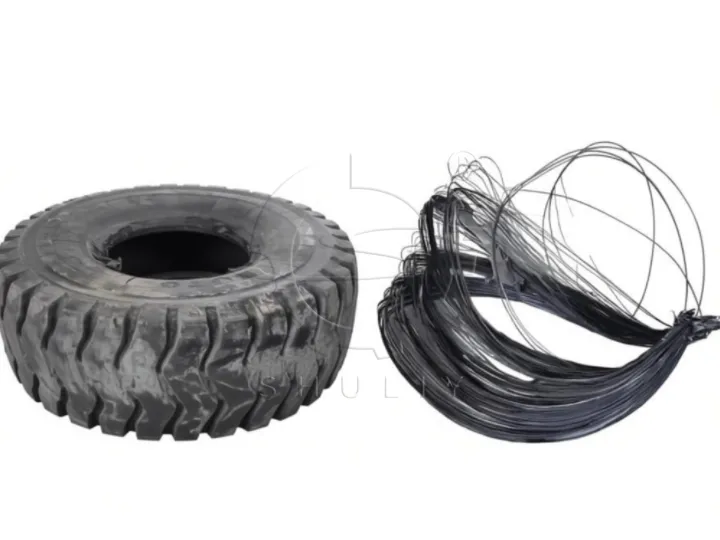
Purchasing a décolleteur de pneus represents a significant investment for recycling operations. This guide walks through essential features, capacity calculations, and selection criteria to help you choose equipment matching your specific requirements.
Principales caractéristiques à évaluer
Conception et résistance du crochet
Le crochet constitue la pièce la plus critique. Recherchez une construction en acier allié pour la durabilité, des pointes de crochet remplaçables pour réduire les coûts de maintenance, un espacement de crochet ajustable pour différents tailles de pneus, et des surfaces traitées thermiquement pour résister à l’usure.
Performance du système hydraulique
La puissance hydraulique détermine la capacité d’extraction. Une pression plus élevée gère des billes d’acier plus épaisses dans les pneus de camions et OTR.
| Spécification | Usage standard | Usage intensif | Classe OTR |
|---|---|---|---|
| Pression du système | 20-25 MPa | 25-30 MPa | 30-35 MPa |
| Force du cylindre | 15-20 tonnes | 20-25 tonnes | 30 tonnes |
| Capacité du réservoir d’huile | 80-100L | 100-150L | 200L |
Planification et sélection de capacité
Calculez votre volume quotidien
Une planification précise de la capacité évite les goulots d’étranglement. Commencez par compter le nombre de pneus traités chaque semaine. Divisez par le nombre de jours d’exploitation. Ajoutez enfin une marge de croissance de 25 %. Par exemple, avec un traitement hebdomadaire de 1 400 pneus sur 6 jours, cela donne 233 pneus par jour. Avec une marge de 25 %, la capacité cible devient 291 pneus par jour.
Adapter la capacité au modèle
| Volume quotidien | Modèle recommandé | Production horaire |
|---|---|---|
| Moins de 150 pneus | Crochet simple | 20-30 pneus/heure |
| 150-350 pneus | Double crochet | 40-50 pneus/heure |
| 350 pneus | Plusieurs unités ou OTR | 50 pneus/heure |
Considérations sur la taille des pneus
Pneus de passagers et de camions légers (900-1200mm)
Les déchiqueteurs standard gèrent efficacement ces tailles. Les spécifications clés incluent une portée de crochet de 150-200mm, une largeur de plateforme de 400-600mm, et une pression hydraulique de 20-25 MPa.
Pneus de camions lourds (1200-1800mm)
Ces modèles nécessitent une portée étendue et une force plus élevée. Recherchez une portée de crochet de 200-250mm, une largeur de plateforme de 600-800mm, et une pression hydraulique de 25-30 MPa.
Pneus OTR et miniers (1800-4000mm)
Un équipement spécialisé est obligatoire pour ces pneus géants. Les exigences incluent une portée de crochet de 300-500mm, une construction de cadre renforcée, une pression hydraulique de 30 MPa, et un équipement auxiliaire de manutention.
Exigences en matière de puissance et infrastructure
Spécifications électriques
Vérifiez que votre installation supporte la demande en puissance de la machine. Les modèles à crochet simple nécessitent 11KW avec une alimentation triphasée 380V 25A. Les modèles à double crochet ont besoin de 18,5KW avec une alimentation triphasée 380V 40A. Les modèles OTR requièrent plus de 22KW avec une alimentation triphasée 380V 50A .
Exigences d’installation
Prévoyez un espace adéquat pour une opération sûre. La surface de la machine doit faire au minimum 2m par 1,5m. La zone d’opération doit avoir un dégagement de 1,5m de chaque côté. La zone de flux de matériaux nécessite 3m du côté d’alimentation et 2m du côté de décharge. La hauteur du plafond minimale est de 3m pour l’accès à la maintenance.
Liste de vérification des caractéristiques de sécurité
Les déchiqueteurs modernes incluent des protections standard telles que des boutons d’arrêt d’urgence à plusieurs endroits, des verrouillages de sécurité empêchant le fonctionnement avec des protections ouvertes, des valves de décharge de pression hydraulique, et des circuits de protection contre la surcharge. Les considérations de sécurité supplémentaires incluent une protection autour des pièces mobiles, des caractéristiques de réduction du bruit puisque les systèmes hydrauliques dépassent 85dB, des commandes ergonomiques réduisant la fatigue de l’opérateur, et une visibilité claire sur la zone de travail.
Évaluation du fabricant
Expérience et spécialisation
Priorisez les fabricants ayant plus de 5 ans de production d’équipements de recyclage de pneus, un historique prouvé dans votre région, une spécialisation dans le traitement des pneus plutôt que dans le recyclage général, et des clients de référence que vous pouvez contacter.
Support et service
Le support après-vente est très important. Recherchez une documentation technique dans votre langue, une disponibilité des pièces détachées en 2-4 semaines, une capacité de dépannage à distance, et des options de service sur site.
Considérations de prix et planification budgétaire
Fourchettes de prix par catégorie
Comprendre la tarification du marché aide à l’allocation du budget. Les modèles d’entrée de gamme à crochet simple coûtent entre 8 000 $ et 12 000 $. Les modèles à double crochet de gamme moyenne coûtent entre 12 000 $ et 18 000 $. Les modèles haut de gamme pour usage intensif coûtent entre 18 000 $ et 25 000 $. L’équipement spécialisé pour pneus OTR varie de 25 000 $ à 40 000 $.
Coût total de possession
Calculez au-delà du prix d’achat. Les coûts d’exploitation annuels incluent l’électricité à 1 500 $ à 3 000 $, selon l’utilisation, l’huile hydraulique à 300 $ à 500 $, le remplacement des crochets à 800 $ à 1 500 $, et la main-d'œuvre de maintenance à 1 000 $ à 2 000 $. Le coût annuel total varie de 3 600 $ à 7 000 $.
Prise de décision finale
Évaluez chaque option selon vos priorités. La correspondance de capacité pèse pour 25 %, le prix pour 20 %, les fonctionnalités pour 20 %, le support pour 20 %, et le délai de livraison pour 15 %. Avant de finaliser l’achat, demandez une démonstration vidéo avec vos types de pneus, visitez des installations de référence si possible, examinez les spécifications détaillées par écrit, confirmez les prix et la disponibilité des pièces détachées, vérifiez la compatibilité électrique avec votre installation, et comprenez le délai de livraison et le support à l’installation.
Erreurs courantes à éviter lors de l’achat
Acheter une capacité insuffisante crée des goulots d’étranglement dans la production. Prévoyez toujours une croissance de 25 %. L’achat d’équipements standard pour pneus OTR entraîne une défaillance prématurée. Faites correspondre l’équipement à la taille réelle des pneus traités. Les améliorations électriques, les travaux de fondation et l’installation ajoutent 15-25 % au coût de l’équipement. Incluez ces coûts dans votre budget. Le prix d’achat le plus bas ne garantit pas le coût total le plus faible. Considérez la qualité du service et la disponibilité des pièces.
Conclusion
Selecting the right décolleteur de pneus requires balancing capacity requirements, tire specifications, infrastructure constraints, and budget limitations. Focus on equipment matching your current needs with room for growth, backed by reliable manufacturer support.
Take time evaluating options against the criteria outlined in this guide. The right choice protects downstream equipment, maximizes steel recovery revenue, and delivers reliable performance for years. Ready to discuss specific models for your operation? Our team provides detailed specifications and capacity planning assistance tailored to your tire recycling requirements. Contact us to learn more about our tire debeader machines.